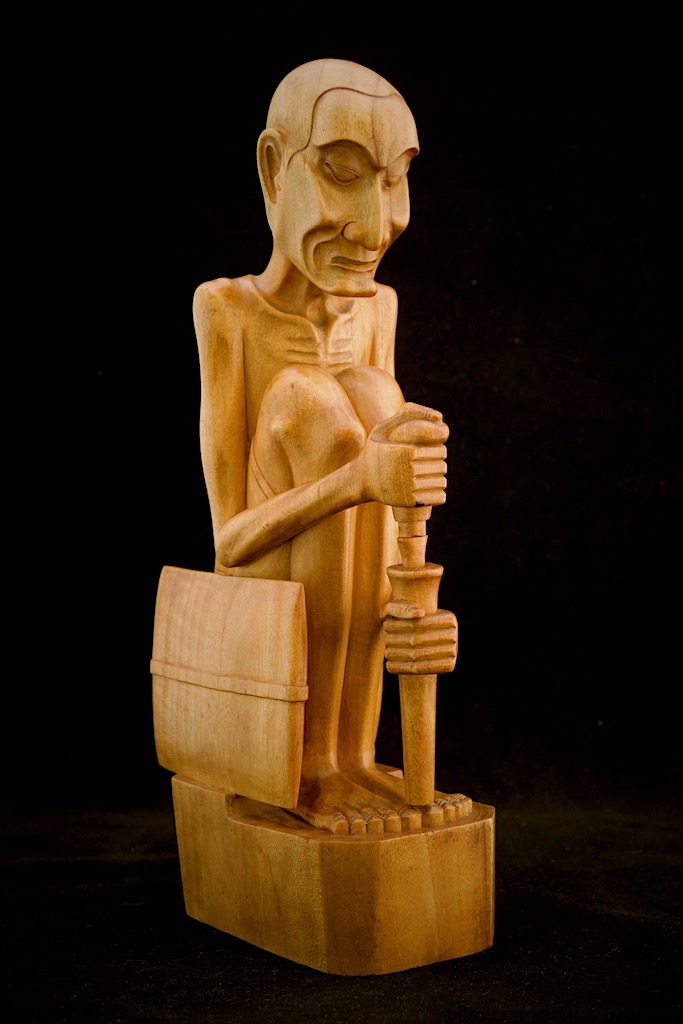
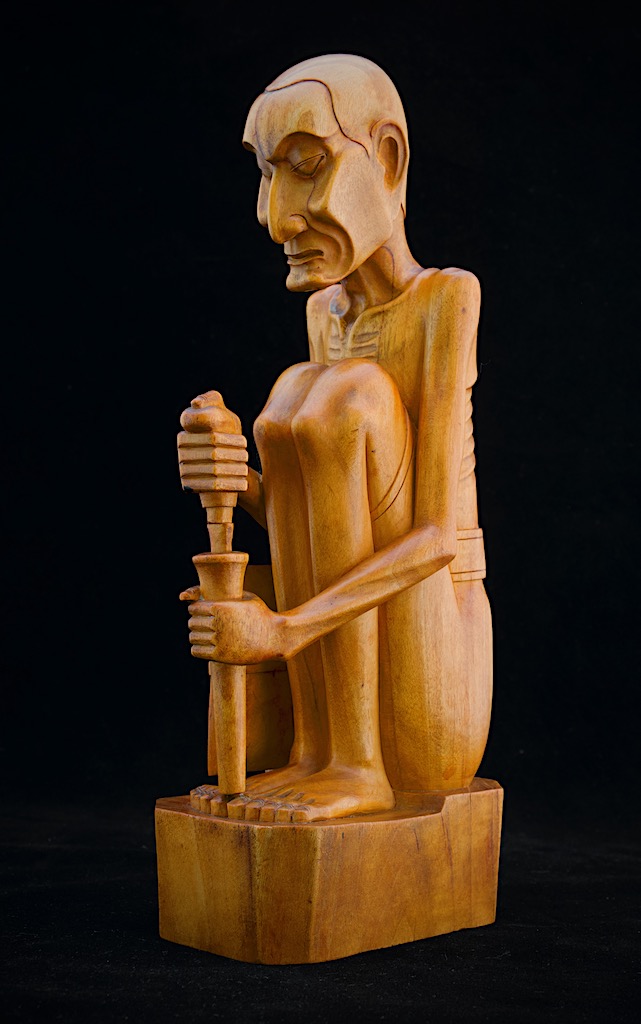
This stylized wood carving of a seated old man was made in the 1930s. The man is depicted with a penglocokan and kompek (sirih pestle and bag). Sirih pestles were mainly used by old people who no longer had their own teeth, so that the betel nut and other ingredients could be pounded to a pulp and then more easily enjoyed. The pestle itself is therefore also a symbol of old age.
Betel chewing (in Malay: makan sirih) was widespread in Bali and offered to guests as a sign of welcome. The basic ingredients are betel leaf, areca nut and lime powder (from burned sea shells). Other ingredients, such as tobacco and spices, could be added to make it more fragrant. Betel chewing reduces the appetite and turns the teeth (and mouth) red and if they are not cleaned eventually black. It was also a way for Balinese women to color their lips red before the introduction of lipstick. And it was thought to be a cure for bad breath and to make people strong.
After the introduction of cigarettes most people stopped chewing betel. It’s central role in Balinese culture is still evident in the use of the three main betel ingredients in almost all offerings and ceremonies; the colours symbolising the colours of the three main Hindu gods. The red areca nut symbolises Brahma, the Creator; the green betel leaves symbolise Wisnu, the Preserver; and the white lime symbolises Siwa, the Destroyer.
Wisdom and old age
Statues of old men and women are still a popular motif in Balinese woodcarving art. They represent wisdom and old age. This is also reflected in the many busts of old people with wrinkled faces.
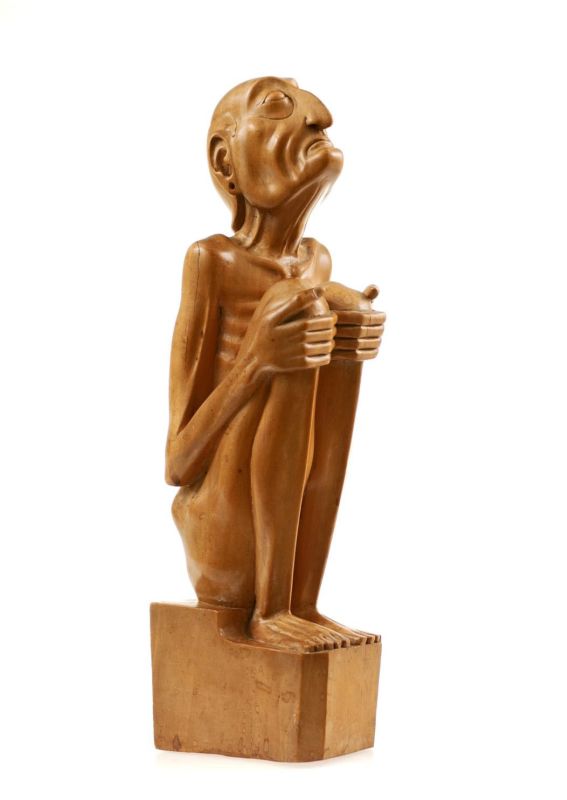
One of the most beautiful and symbolic old men statues can be seen in the Tropenmuseum in Amsterdam. The woodcarving of a naked squatting man looking up was made by Pita Maha master carver I Made Gerembuang. His stylized sculpture has an old mystical appearance and is modern at the same time.
The description of the museum reads:
‘Wooden statue of a very aged man who is squatting, his arms around his legs and his eyes turned to heaven. Although the man looks upwards, it’s also turned inwards. It’s a representation of a human being in the moment between life and death.’
 Art Deco Bali blog