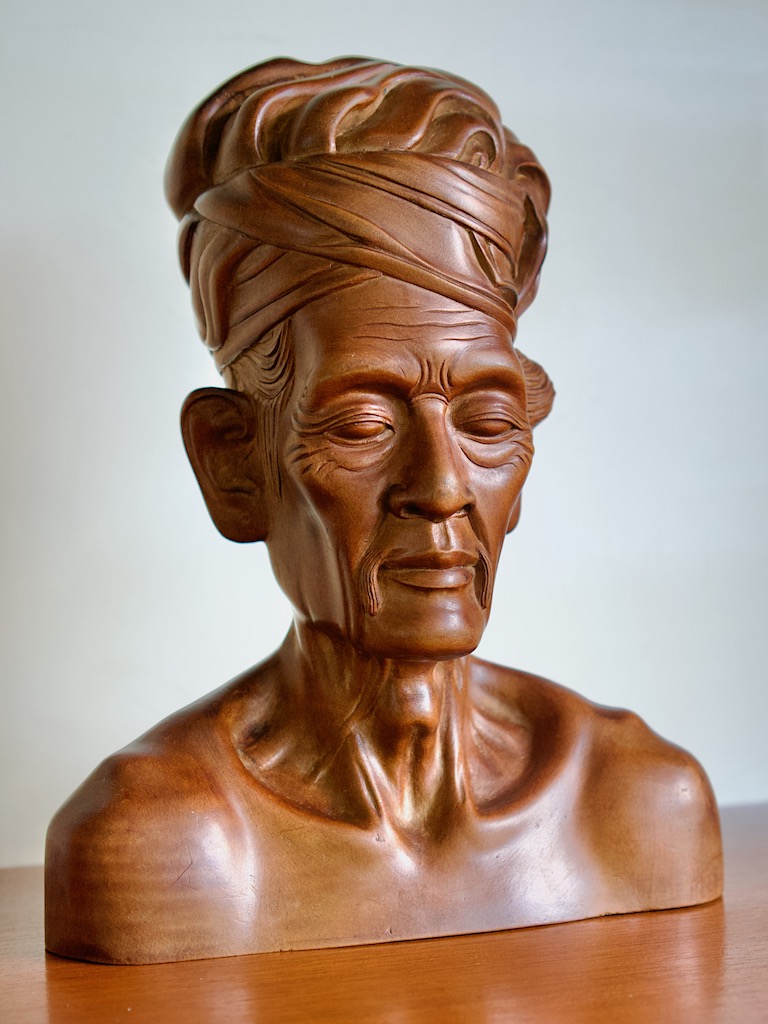
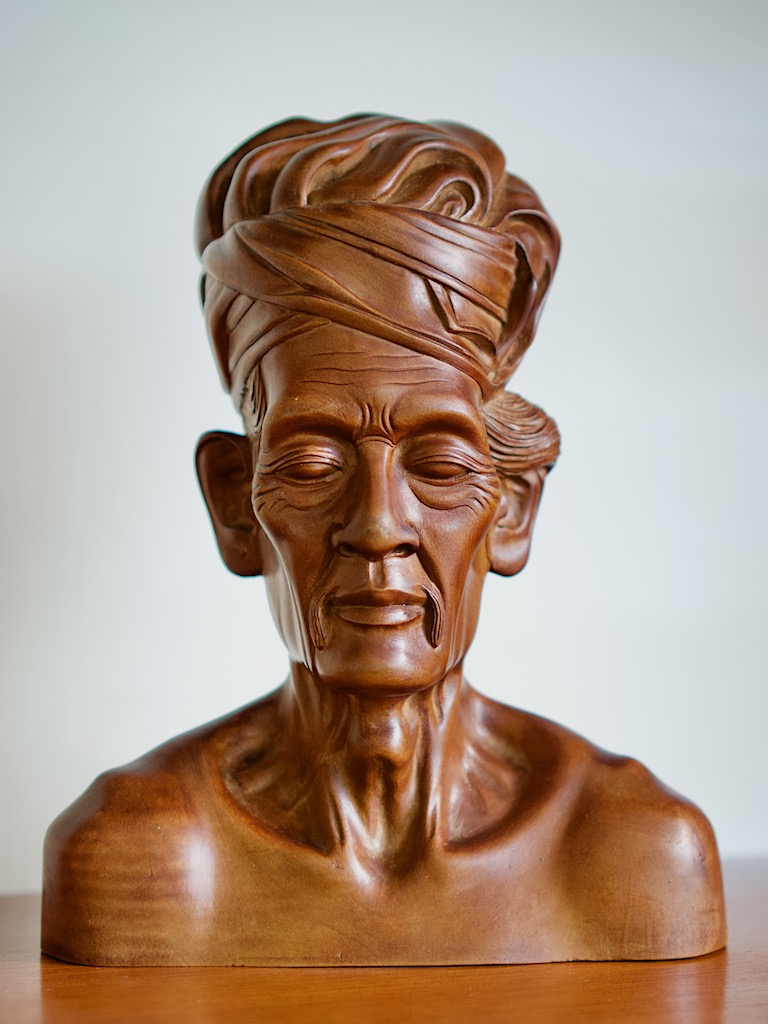
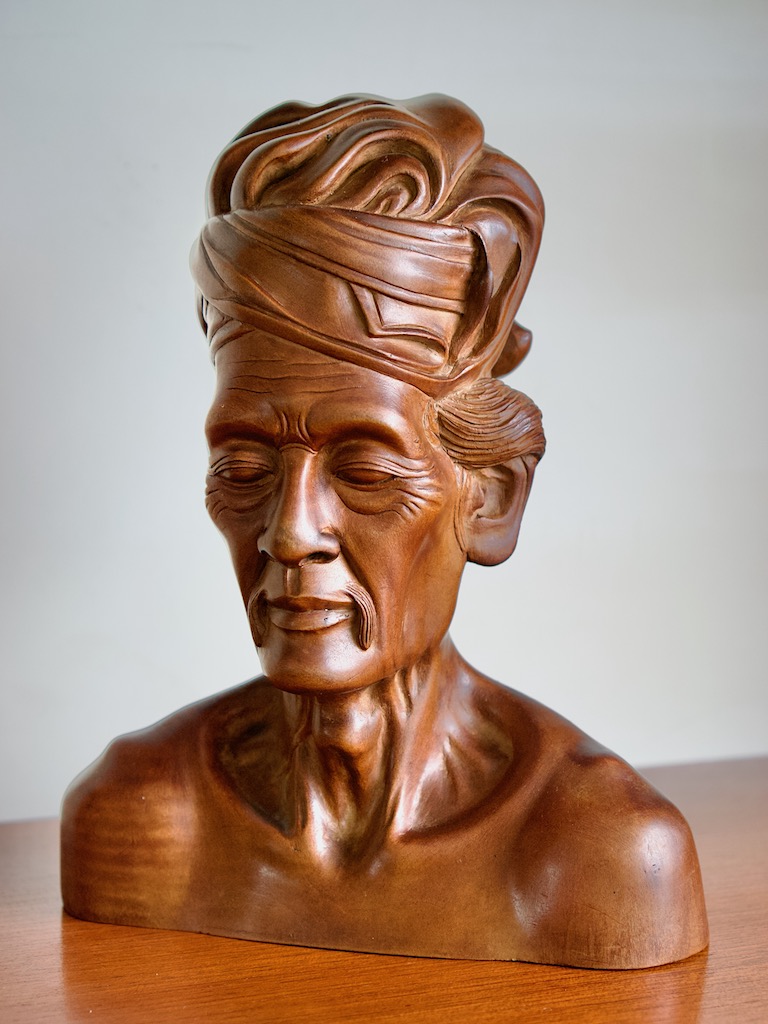
This bust of an old Balinese man was made by a skilled woodcarver in the 1930s. The carving is of very high quality. The face is so lifelike that you would almost think it’s a portrait. The man has an ascetic appearance, which is emphasized by his sunken cheeks, high forehead and his lean and muscular neck. The lack of pupils in his eyes makes it seem as if his gaze is directed inward.
The woodcarver has put a lot of effort into the man’s beautiful headcloth, which is tied at the back with a large knot (not visible in the photos). This is called an udeng beblatukan; the headgear of a pemangku (temple priest). They are known for fasting regularly, which could explain the man’s ascetic appearance. But it could also be an elder who helps with the upkeep of the temple. In Bali, it’s a custom for old men to retire from active life and to study religious writings or help in the temple. Sometimes they isolate themselves in nature in order to fully focus on their faith.
Growing old means getting closer to the end of live, which opens the possibility of moksa: release from the cycle of rebirth and merge with the divine. In order to achieve this, one must live in accordance with the principles of cosmic harmony; achieve good karma (quality of one’s deeds) and properly perform the social and religious dharma (duties).
Wood carvings of old men therefore represent wisdom and old age.
 Art Deco Bali blog